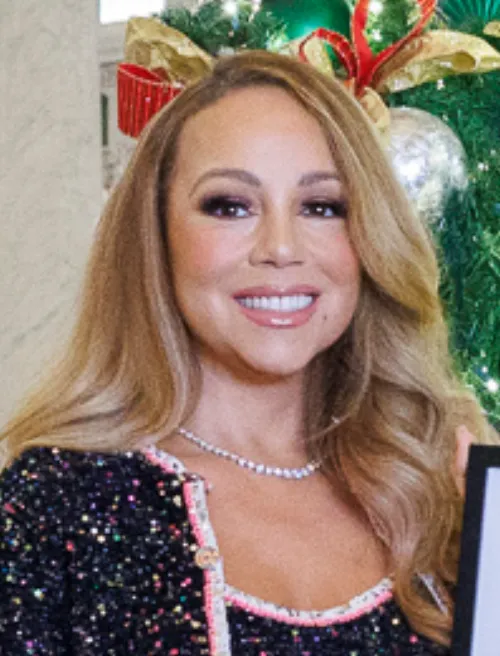
Mariah Carey was born on March 27, 1969, in Huntington, New York, the daughter of Alfred Roy Carey, an aeronautical engineer of Afro-Venezuelan and African-American descent, and Patricia Hickey, an Irish-American opera singer and vocal coach. Her parents divorced when she was three, and she was raised primarily by her mother in difficult financial circumstances — the family moved frequently, and Mariah worked as a waitress, hat checker, and restaurant hostess while studying at Harborfields High School and pursuing her music career as a teenager. She moved to New York City at 17, living with roommates in Manhattan while working service jobs and performing as a background vocalist and demo singer, hoping for her break. That break came at a 1988 CBS Records industry party, when she pressed a demo tape into the hands of Columbia Records president Tommy Mottola, who listened to it in his limousine and called her before he arrived home.
Mariah Carey's commercial dominance in the 1990s was extraordinary: her self-titled debut album (1990) produced four consecutive number-one singles — a debut record. Her Emotions album (1991) featured the title track in which she performed the whistle register (the highest register of the female voice, rarely heard in popular music) publicly for the first time, demonstrating a vocal capability that would become her signature and the subject of considerable cultural fascination. Her Music Box album (1993) and Daydream album (1995) each sold over 20 million copies globally. She became the best-selling music artist of the 1990s. Her marriage to Tommy Mottola, her mentor and label head — they married in 1993 and divorced in 1998 — was a complicated personal and professional relationship that she has subsequently described as controlling and isolating.
Mariah Carey's 2001 breakdown — following the commercial disappointment of her film and album Glitter, a public unraveling that included erratic behavior on a TRL appearance and a subsequent hospitalization — was the most public mental health crisis of any music star of that era. She described it subsequently as exhaustion and the release of years of accumulated pressure; she was diagnosed with bipolar disorder during this period, a disclosure she made publicly in 2018. Her return — the Emancipation of Mimi album of 2005, which became the best-selling album of the year and included the massive hit 'We Belong Together' — was one of the most complete comebacks in music history. She had demonstrated, in the worst possible public circumstances, that her talent was genuine and that she was not diminished.
All I Want for Christmas Is You, released in 1992, has become one of the most commercially successful songs in music history — re-entering the Billboard Hot 100 charts every December for over 30 consecutive years and reaching number one for the first time in 2019, 27 years after its release. Its annual commercial value — estimated at $2-3 million per year in streaming and licensing revenue — has made Carey's 'Christmas Queen' identity a permanent feature of global popular culture, and she has embraced and cultivated it with characteristic savvy. She has 18 number-one singles on the Billboard Hot 100, more than any solo artist in history and tied with the Beatles, and a five-octave vocal range that remains among the most extraordinary in recorded music.