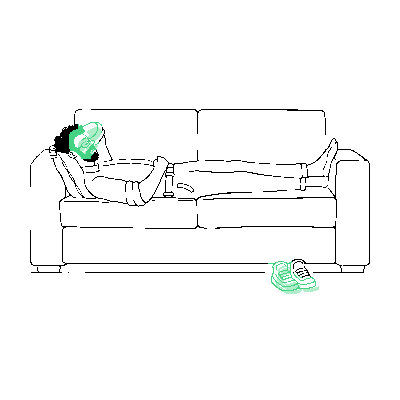
🦉 Couche-Tard~25% of the population

INFJ ChronotypeThe CounselorCouche-Tard

Rythmes de Sommeil & Chronotype de INFJ

Les INFJ sont des couche-tard silencieux dont les tendances nocturnes decoulent d'une necessite emotionnelle plutot que d'une pure impulsion intellectuelle. Apres avoir passe la journee a absorber les emotions des autres grace a leur puissante fonction Fe, les INFJ ont besoin de la solitude de la nuit pour decompresser, traiter et se reconnecter avec leur propre monde interieur. Les heures tardives sont le moment ou les INFJ se sentent enfin eux-memes - liberes du poids des besoins des autres.

Pourquoi les INFJs sont des Couche-Tards : Fonctions Cognitives & Sommeil

La fonction dominante Ni (Intuition Introvertie) partage la meme affinite nocturne que celle de l'INTJ, aspirant a des environnements a faible stimulation pour son travail de tissage de modeles. Cependant, la fonction auxiliaire Fe (Sentiment Extraverti) de l'INFJ ajoute une dimension unique - la journee est passee a s'harmoniser avec les etats emotionnels des autres, ce qui est energetiquement epuisant. La nuit devient le seul moment ou Ni peut fonctionner sans que le radar social constant de Fe soit actif, rendant les heures du soir a la fois restauratrices et generatrices de creativite.

Fonction Dominante

Ni activates most powerfully during solitary nighttime hours, producing the vivid intuitive leaps and symbolic thinking that INFJs are known for. Many INFJs describe their best writing, art, and ‘aha moments’ as happening between 10 PM and 1 AM.

Fonction Auxiliaire

Fe runs at high capacity during social hours, leaving the INFJ emotionally depleted by evening. The transition from Fe-mode to Ni-mode happens naturally around 8-9 PM as social obligations end, and this shift is essential for INFJ wellbeing.

Schéma d'Énergie de INFJ Tout au Long de la Journée

INFJs wake with moderate energy that is immediately allocated to Fe — tuning into household members’ moods, preparing for social interactions ahead. Mid-morning is their best analytical window before the social demands of the day fully consume Fe energy. Early afternoon is optimal for meetings and collaboration, but by 4-5 PM, a noticeable emotional fatigue sets in. An evening ‘recharge period’ of solitude is essential. By 9-10 PM, Ni awakens fully and creative energy surges, often lasting until midnight or beyond.

Fenêtres de Productivité Maximale de INFJ

🎨

Pic Créatif

10 PM - 1 AM

📊

Pic Analytique

10 AM - 12 PM

🤝

Pic Social

1 PM - 4 PM

Défis de Sommeil Communs pour INFJ

  • !Replaying social interactions and worrying about others’ feelings at bedtime, making it hard to quiet the Fe ‘social radar’
  • !Using late-night solitude as the only self-care time, leading to sleep sacrifice in favor of precious alone time
  • !Vivid, emotionally intense dreams (a hallmark of dominant Ni) that can disrupt sleep quality and cause morning grogginess

Routine Quotidienne Idéale pour INFJ

🌅

Matin

Wake around 8 AM with a gentle, non-jarring alarm. Spend 20-30 minutes in complete solitude before engaging with anyone — journaling, meditation, or simply sitting quietly with tea. This ‘Ni buffer’ sets emotional boundaries for the day ahead and prevents immediate Fe overwhelm.

☀️

Après-midi

Handle analytical and strategic tasks in the late morning window. Schedule emotionally demanding interactions (counseling, deep conversations, conflict resolution) for early afternoon when Fe is fresh. By mid-afternoon, begin reducing social exposure. Use the 4-6 PM window for solitary, low-pressure tasks.

🌆

Soirée

After 7 PM, protect solitude fiercely. This is Ni’s domain — use it for creative writing, artistic expression, spiritual practice, or deep reading. Dim lighting and calming music enhance Ni’s natural evening activation. Avoid emotionally heavy content (news, social media drama) that re-engages Fe.

🌙

Heure du Coucher

Begin winding down at 11 PM with a deliberate emotional release ritual — journaling about the day’s emotional residue, a brief meditation, or a gratitude practice. This helps Fe ‘close its tabs.’ Keep the bedroom cool and dark to support the deep, dream-rich sleep that Ni needs for overnight insight processing.

Conseils d'Optimisation du Sommeil pour INFJ

  • Create a ‘feelings dump’ journal specifically for bedtime — writing out unprocessed emotions from the day prevents them from cycling through your mind as you try to sleep
  • Negotiate ‘non-negotiable alone time’ with family or partners from 9-11 PM — this is not antisocial, it’s essential maintenance for your cognitive stack
  • If vivid dreams are disrupting sleep, try a 5-minute visualization exercise before bed where you consciously ‘set’ a calm scene for Ni to process overnight
  • Resist the urge to check your phone first thing in the morning — Fe immediately locks onto others’ messages and moods, robbing you of your Ni morning buffer

Perspectives de Santé pour les INFJ Couche-Tards

INFJs who chronically sacrifice sleep for alone time develop a dangerous pattern: Fe depletion during the day leads to longer night recovery needs, which leads to less sleep, which leads to even less Fe resilience. Breaking this cycle requires scheduling daytime solitude breaks (even 15 minutes) rather than relying solely on nighttime hours for emotional recovery.

Compatibilité de Chronotype INFJ

INFJ night owls living with early bird ESTJ or ESFJ types can actually benefit from the schedule difference — the early bird’s early bedtime naturally provides the solitude the INFJ craves. The challenge is mornings: the early bird is energized and social while the INFJ needs silence. Establishing a ‘quiet morning’ agreement where the first hour is interaction-free can transform this from a conflict into a complementary rhythm.

Autres Types Couche-Tard

Explorer Plus

À Propos de Cette Analyse

Cette analyse de chronotype pour INFJ est basée sur des corrélations entre les fonctions cognitives MBTI et la recherche sur les rythmes circadiens. Les habitudes de sommeil individuelles varient et sont influencées par la génétique, l'âge, le mode de vie et l'environnement. Ce contenu est fourni à des fins d'information et de divertissement uniquement et ne doit pas remplacer un avis médical professionnel concernant les troubles du sommeil ou les conditions de santé.