Sam Walton - ESTJ Personality Type

Sam WaltonESTJ - Manager

Walmart Founder

Origin

USA

Typing Confidence

widely accepted

Quick Facts

Born
March 29, 1918
Birthplace
Kingfisher, Oklahoma, USA
Nationality
American
Zodiac Sign
Education
University of Missouri (Economics)
Known For
Founded WalmartWalmart discount retail modelrichest American for Forbes (1985–1988)servant leadership

Who is Sam Walton?

Samuel Moore Walton was born on March 29, 1918, in Kingfisher, Oklahoma, the son of a farmer turned farm-loan businessman and his schoolteacher wife. The family moved to Missouri during the Depression, and Walton grew up in Columbia, Missouri, where he graduated from the University of Missouri with an economics degree in 1940. He entered the retail business through a J.C. Penney management trainee program before serving in the Army during World War II, returning to open a Ben Franklin franchise in Newport, Arkansas, in 1945. When his landlord declined to renew his lease in 1950, he moved to Bentonville, Arkansas — the town that would become the headquarters of the largest company in human history.

Walton's insight — that rural American consumers were underserved by existing retail, that they would drive significant distances to access genuine discount prices, and that the volume of sales that resulted could underwrite a cost structure that would make the prices sustainable — was not original as an idea but became significant in its execution. Walmart's first store opened in Rogers, Arkansas, in 1962. The expansion that followed was guided by Walton's ESTJ insistence on operational discipline: the systematic tracking of inventory, the rigorous management of supplier relationships, the investment in technology (Walmart was an early adopter of bar-code scanning and satellite-linked inventory systems) that made the scale manageable.

By 1985, Sam Walton was the richest man in America, a position he held with characteristic discomfort: he drove a 1979 pickup truck, lived in a modest house, and cut his own hair at a local barbershop. His autobiography Made in America (1992) — completed as he was dying of bone marrow cancer — describes a life organized around the ESTJ values of work, community, and the competitive satisfaction of operational excellence. His relationships with employees — called 'associates' — were structured by his conviction that genuinely engaged people performed better than merely compensated ones, and his practice of visiting stores unannounced, knowing the names of stock room employees, and sharing financial data with all associates was creative for corporate America of the 1970s and 1980s.

Walton died on April 5, 1992, having built the largest private employer in the United States and one of the most life-changing business enterprises in economic history. Walmart's legacy is contested: its practices transformed supply chains and consumer prices while also displacing small businesses and, critics argue, driving down wages across the sectors it entered. Walton himself was aware of the disruption his company caused; he believed the value delivered to customers outweighed the cost to competitors. He received the Presidential Medal of Freedom one month before his death.

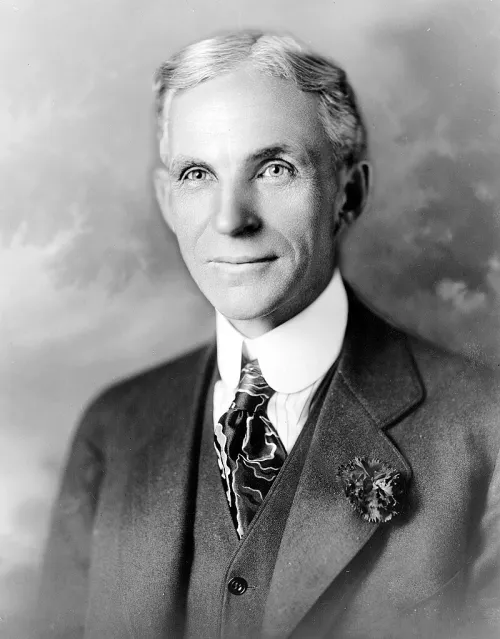
Sam Walton's ESTJ Personality Type

Sam Walton, known for their work as a Walmart Founder, exhibits the classic traits of an ESTJ personality type - Manager. This personality profile is characterized by a unique combination of cognitive functions that shape how they perceive the world and make decisions.

Key ESTJ Traits in Sam Walton

As an ESTJ, Sam Walton demonstrates the core characteristics associated with this personality type. These traits have played a significant role in their success and public persona as a Walmart Founder. Understanding their personality type provides insight into their motivations, strengths, and the unique perspective they bring to their field.

Why Sam Walton is Typed as ESTJ

The ESTJ personality type is one of the 16 Myers-Briggs personality types, and Sam Walton's public behavior, decision-making patterns, and communication style align closely with this classification. ESTJ individuals like Sam Walton are known for their distinctive approach to problem-solving and interpersonal relationships.

Sam Walton's Career Highlights

1945

First store: Ben Franklin franchise, Newport AR

First retail experience; built to highest sales volume in the district before losing lease

1962

First Walmart store, Rogers, Arkansas

Founded alongside Kmart and Target; outlasted both in long-term dominance

1970

Walmart public offering

IPO funded expansion beyond Arkansas; stock appreciation made early investors wealthy

1985

Richest American (Forbes)

Walmart reached national dominance; Walton named richest person in America

1991

Largest US retailer

Walmart surpassed Sears and Kmart to become the largest retailer in America

Awards & Recognition

\u2605Presidential Medal of Freedom (1992)\u2605Horatio Alger Award (1984)\u2605Forbes Richest American (1985–1988) (1985–1988)

Sam Walton's Mystic Profile

Discover Sam Walton's cosmic connections through zodiac, tarot, crystals, and spirit animals.

aries

Zodiac Prediction

Sam Walton's Aries sun in an ESTJ chart is the astrological signature of the pioneer who is genuinely first — who goes to the places others have not thought to go (rural America), builds the thing others have not thought to build (the discount store for communities without access to it), and does so not from theoretical analysis but from the Aries instinct that simply moves before the terrain has been mapped. His famous willingness to fly his own small plane to scout new store locations — landing in fields, walking into small towns, counting cars in parking lots — is pure Aries: the direct, unmediated encounter with reality as the primary source of strategic intelligence.

🃏

the emperor

Tarot Card Match

The Emperor — the builder of structures that endure, of systems that organize the chaotic into the orderly, of the organization that is in itself a form of power — is Walton's card. He built the largest private organization in human history from a single store in rural Arkansas, and the organization he built has the Emperor quality: the precise hierarchy, the clear chain of command, the systematic approach to every operational variable, and the conviction that what is built to last will last. The Emperor is also the card of the man who is genuinely comfortable in the role of ultimate authority — who takes responsibility for the consequences of his decisions without deflecting it to others — which Walton captured throughout his life.

💎

tigers eye

Crystal Match

Tiger's eye — the stone of the practical visionary, of the person who can see the long-term opportunity and also identify the immediate operational step that moves toward it — is Walton's stone. His retail vision was exactly this: he could see what rural American retail would eventually become and also see exactly which crossroads to put the first store on and how to negotiate the supplier terms that would make the price point viable. Tiger's eye is associated with the integration of vision and execution, of strategy and tactics, which is the combination that made Walmart possible.

🦁

eagle

Spirit Animal

The eagle — the bird who surveys vast territory from the highest altitude and identifies precisely where the opportunity lies — is Walton's spirit animal, with the added dimension that he would then fly there himself in his own small plane to confirm what the eagle's-eye view had suggested. His practice of aerial reconnaissance of retail locations captures the eagle quality perfectly: the high-altitude perspective combined with the willingness to descend to ground level and verify the view with direct observation. The eagle does not theorize about the landscape; it knows the landscape through the combination of vast overview and direct encounter.

More Famous ESTJ Personalities

About This Analysis

This personality type analysis of Sam Walton is based on publicly available information, interviews, biographical accounts, and behavioral observations. The ESTJ typing represents an educated assessment by personality type enthusiasts and experts, but should not be considered as officially confirmed unless stated otherwise. Personality is complex and multifaceted, and public personas may differ from private personalities.