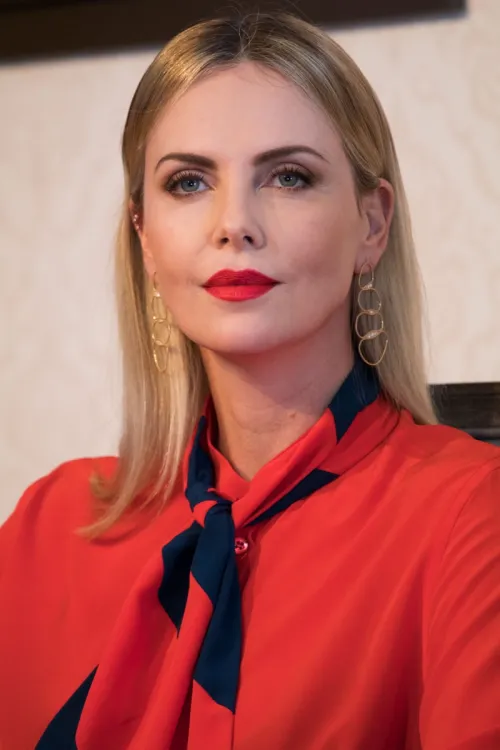
Charlize Theron was born on August 7, 1975, in Benoni, a mining town east of Johannesburg, South Africa, the only child of Gerhardt Theron and Gerda Jacoba. Her childhood was marked by two forces that would shape everything: extraordinary physical beauty and a household of violence. Her father, a chronic alcoholic, came home drunk and armed on the night of June 21, 1991 — Charlize was fifteen — fired his gun at her mother and herself, and was killed by her mother, who fired back in self-defense. No charges were filed; the killing was ruled self-defense. Theron has spoken about this event selectively in interviews over the decades, acknowledging its formative impact without dramatizing it for audiences, which is itself a kind of power: the refusal to be defined by someone else's worst moment.
Theron had trained as a ballet dancer from childhood and moved to Johannesburg at thirteen to study at the National School of the Arts. At eighteen, she moved to New York with her mother to study with the Joffrey Ballet, but a chronic knee injury ended her dancing career definitively. Stranded in Los Angeles with no money, she was discovered by talent agent John Crosby after he observed her arguing forcefully with a bank teller who refused to cash her check — her combination of physical presence and force of personality in that confrontation caught his eye. Early roles were small, and it was immediately apparent that Theron was impatient with being cast purely for her appearance. She used the capital from her first commercially successful films to establish Denver and Delilah Productions, her production company, specifically to develop projects that would demand her range rather than just her face.
Monster (2003) was the turning point. For the role of real-life serial killer Aileen Wuornos, Theron gained approximately thirty pounds, had her teeth prosthetically altered, and spent months absorbing Wuornos's court appearances and interview footage until she found not just the woman's appearance but the specific quality of her psychology: the combination of victimization and genuine danger, the awareness of her own irredeemability. The performance was so complete that audiences who knew Theron from her earlier glamorous roles found the transformation almost incomprehensible. It won every major award of the season, including the Academy Award, BAFTA, SAG, and Golden Globe for Best Actress. It was one of the great physical and psychological transformations in cinema history.
The career that followed Monster has been one of the most deliberately constructed in Hollywood: Young Adult (2011), a darkly comedic Diablo Cody film that refused to make its protagonist sympathetic; Prometheus (2012), her first major science fiction role; Mad Max: Fury Road (2015), which she co-produced through sheer force of will over a famously difficult production and in which her Imperator Furiosa became one of action cinema's defining female characters; Atomic Blonde (2017), which she also co-produced and for which she trained to a professional fighting standard; Bombshell (2019), in which she played Megyn Kelly with the same physical specificity she had brought to Wuornos. Theron has adopted two children as a single parent and has spoken publicly about raising her daughter Zahara (later identified by her daughter as Jackson) as a trans girl — making her one of the most prominent public advocates for trans youth at a time when that advocacy carries genuine professional and social risk.