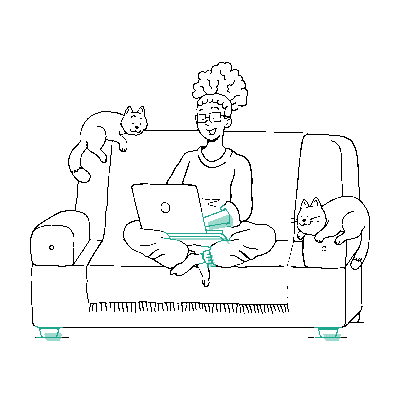
How ESFJs Thrive Working Remotely
ESFJs are the social architects of remote work environments. With dominant extraverted feeling (Fe) and auxiliary introverted sensing (Si), they naturally build the interpersonal connections and team rituals that prevent remote work from feeling like solitary confinement. They are the first to organize virtual happy hours, the first to welcome new team members, and the first to notice when someone is struggling. Remote work is simultaneously liberating and challenging for ESFJs. They appreciate the reduced commute and the ability to create a comfortable home workspace, but they deeply miss the daily social interactions that energize them. The hallway conversations, the shared lunches, and the ability to read a room — these are the ESFJ's natural tools for maintaining team harmony, and remote work strips most of them away. They compensate by over-investing in digital social rituals. The challenge for ESFJs is maintaining their own well-being while caring for everyone else's. They are prone to becoming the team's emotional dumping ground, absorbing complaints and frustrations without adequate support for themselves. They also struggle when their social efforts go unappreciated — organizing a virtual game night that half the team skips can feel like a personal rejection. ESFJs need to learn that not everyone expresses appreciation the same way and that their contributions are valued even when not explicitly acknowledged.