Shrek
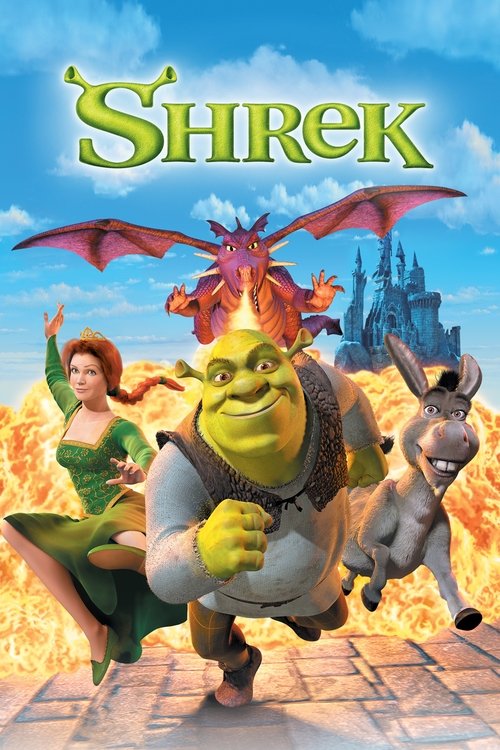
Discover the MBTI types of Shrek characters — Shrek, Donkey, Fiona, Puss in Boots, Lord Farquaad, and more
Analistas
Rumpelstiltskin
AnalystRumpelstiltskin's INTJ cognitive stack makes him Shrek Forever After's most intellectually dangerous villain. His dominant Ni constructs elaborate long-term visions with surgical precision—he does not merely scheme but builds entire alternate realities, envisioning a world where he rules Far Far Away and patiently manipulating events across years until the opportunity to make that vision real presents itself through Shrek's moment of vulnerability. His auxiliary Te executes these Ni visions through airtight contractual logic, crafting deals where every clause, loophole, and fine print serves his strategic advantage, treating magical contracts as Te systems to be optimized for maximum personal benefit. Rumpelstiltskin's tertiary Fi surfaces in the deeply personal nature of his ambition—his desire to rule is not abstract power-seeking but stems from a wounded sense of entitlement, a Fi conviction that he was cheated out of his rightful place when Fiona's parents chose Shrek's rescue over his deal. His inferior Se manifests in his theatrical outbursts and tantrums when plans go awry, losing composure in fits of physical frustration that contrast sharply with his usual calculated demeanor. Rumpelstiltskin's arc illustrates the unhealthy INTJ pattern: brilliant Ni-Te strategic architecture undermined by immature Fi grievance, building elaborate systems of control not to achieve a greater vision but to satisfy a personal wound that no amount of external power can actually heal.
“I always wanted to be king. And now I am!”Learn about INTJ →
Big Bad Wolf
AnalystThe Big Bad Wolf's INTP cognitive stack subverts fairy tale expectations with quiet intellectual independence. His dominant Ti drives his rejection of the assigned narrative—he has logically deconstructed the 'big bad wolf' role and concluded it does not serve him, lounging in grandma's clothing as a genuine lifestyle preference his Ti framework sees no reason to abandon. His auxiliary Ne manifests in his unconventional approach to identity, exploring possibilities far outside the traditional script and embracing the absurd juxtaposition of a wolf in a nightgown with Ne-driven amusement at the contradiction. The Wolf's tertiary Si surfaces in his comfort with domestic routines—occupying the same bed and wearing the same clothing with creature-of-habit consistency that his Ne identity experiments are built upon. His inferior Fe shows in minimal social engagement, participating in group activities but contributing little emotional energy, content to observe from the margins rather than actively connecting. The Wolf's presence across the franchise illustrates the INTP's relationship with social expectations: he neither rebels dramatically nor conforms obediently but simply opts out of the narrative entirely, constructing a private logical framework for living that renders others' opinions irrelevant.
“What? It's not like it's not obvious.”Learn about INTP →
Lord Farquaad
AnalystLord Farquaad's ENTJ cognitive stack represents the type at its most ruthlessly ambitious. His dominant Te drives his governance through pure efficiency metrics—he displaces every fairy tale creature from Duloc not from personal hatred but because they represent disorder in his perfectly organized kingdom, treating living beings as logistical problems to be relocated with bureaucratic precision. His auxiliary Ni provides the singular vision that motivates everything: becoming a legitimate king by marrying a princess, a goal he pursues with unwavering strategic focus, sending expendable knights on a dangerous quest rather than risking himself. Farquaad's tertiary Se manifests in his obsessive attention to Duloc's physical appearance—the sterile perfection of his kingdom reflects Se aesthetics controlled by Te systems, from the choreographed welcome to the immaculate streets. His inferior Fi is devastatingly underdeveloped, most infamously revealed in his willingness to sacrifice his knights—'Some of you may die, but that's a sacrifice I'm willing to make'—showing complete disconnection from personal empathy or individual human value. Farquaad's arc as the film's villain illustrates the unhealthy ENTJ pattern: when Te efficiency and Ni ambition operate without Fi moral development, leadership becomes tyranny, and the pursuit of a perfect vision requires destroying anyone who does not conform to the plan.
“Some of you may die, but that's a sacrifice I'm willing to make.”Learn about ENTJ →
Gingerbread Man
AnalystGingerbread Man's ENTP cognitive stack packs remarkable personality into a tiny cookie frame. His dominant Ne manifests as an inexhaustible ability to generate witty responses and unexpected angles under extreme pressure—when Farquaad interrogates him by literally dismembering his body, Gingy's Ne produces creative deflections, provocative retorts, and the brilliant Muffin Man misdirection, treating mortal peril as an intellectual sparring match rather than a crisis. His auxiliary Ti provides the detached analytical framework that allows him to maintain composure during torture, processing the situation through logic rather than panic and finding genuine amusement in outsmarting his captor. Gingy's tertiary Fe surfaces in his strong communal bonds with the fairy tale creatures—he organizes, rallies, and fights alongside them with genuine social investment, particularly during the siege of Far Far Away. His inferior Si manifests as a vulnerability around bodily integrity and the trauma of past experiences—despite his brave exterior, the repeated physical damage he sustains creates genuine anxiety about his physical form, a Si concern his Ne-Ti bravado works hard to mask. Gingy's consistent presence across the franchise illustrates the ENTP's most admirable quality: the refusal to be intimidated by superior force, using intellectual agility and irreverent humor as weapons against authority figures who rely on physical power and institutional control.
“Do you know the Muffin Man? ...She's married to the Muffin Man.”Learn about ENTP →
Diplomáticos
Arthur Pendragon
DiplomatArthur Pendragon's INFJ cognitive stack reveals itself gradually beneath layers of adolescent insecurity. His dominant Ni operates as deep intuitive understanding of what true leadership means—even before he believes in himself, he instinctively grasps that ruling should be about compassion rather than conquest, envisioning a different kind of kingdom that neither Shrek's reluctance nor Prince Charming's ambition can conceive. His auxiliary Fe drives the film's pivotal scene where he persuades the fairy tale villains to abandon their attack not through force but through empathetic appeal, speaking to their shared experiences of being outcasts and misunderstood—a masterful Fe intervention that changes the entire battle's outcome. Arthur's tertiary Ti surfaces in his academic environment at Worcestershire Academy, where despite being bullied, he processes his experiences through analytical frameworks and reasoned self-reflection rather than purely emotional reactions. His inferior Se manifests as physical awkwardness and social anxiety—he stumbles, gets bullied, and shrinks from confrontation, his Se underdevelopment making him appear weak in a world that values physical prowess. Arthur's arc from bullied teenager to rightful king illustrates the INFJ's growth pattern: beginning with powerful Ni-Fe vision that the world dismisses because of Se inadequacy, he gradually earns credibility not by developing physical strength but by demonstrating that empathetic insight and moral vision are the truest forms of authority.
“Did you say you were looking for Arthur? ...I know him.”Learn about INFJ →
Pinocchio
DiplomatPinocchio's INFP cognitive stack creates a poignant metaphor for the type's lifelong quest for authenticity. His dominant Fi drives his deepest desire—to be a 'real boy'—which is fundamentally about achieving genuine selfhood rather than remaining a construct shaped by others' expectations, the quintessential INFP yearning to be accepted as one's authentic self rather than a performed version. His auxiliary Ne manifests in his hopeful imagination and ability to envision possibilities beyond his current wooden existence, dreaming of what life could be while maintaining optimism despite his unusual circumstances. Pinocchio's tertiary Si surfaces in his attachment to familiar comforts and the guilt he carries from past dishonesty—his growing nose is a Si record of every deviation from his Fi values, a physical manifestation of the INFP's inability to escape their own moral accounting. His inferior Te shows in his difficulty asserting himself in group situations, often going along with others' plans and struggling to organize effective resistance when pressured. Pinocchio's role across the Shrek franchise illustrates the INFP's essential dilemma: the tension between the desire for authentic self-expression and the social pressure to conform, brilliantly literalized by a character whose body physically betrays any attempt at inauthenticity, making him the most transparently honest character in a world full of fairy tale pretense.
“I'm not a puppet! I'm a real boy! ...Well, sort of.”Learn about INFP →
Prince Charming
DiplomatPrince Charming's ENFJ cognitive stack creates a fascinating study of the type driven by external validation rather than genuine empathy. His dominant Fe manifests as an obsession with social perception—he needs to be seen as the hero, the rightful king, the romantic ideal, measuring his worth entirely through others' approval and becoming unmoored when that approval is withdrawn. His auxiliary Ni provides the singular vision that his mother instilled: the narrative that he is destined to rescue the princess and rule the kingdom, a Ni fixation so rigid that he cannot adapt when reality deviates from this script. Prince Charming's tertiary Se surfaces in his theatrical physicality and performative heroism—he stages elaborate dramatic performances and presents himself with polished Se aesthetics, from his flowing hair to his dramatic entrances. His inferior Ti manifests as an inability to think independently or analyze situations without his mother's guidance, blindly following her Fe-Ni narrative framework without questioning its logical foundation. Prince Charming's arc across Shrek 2 and Shrek the Third illustrates the unhealthy ENFJ pattern: when Fe seeks validation rather than genuine connection and Ni serves personal entitlement rather than communal vision, the type's natural leadership becomes narcissistic manipulation, rallying others not for a shared purpose but to restore the social status the ENFJ believes they deserve.
“You can't do this to me! I'm supposed to live happily ever after!”Learn about ENFJ →
Fairy Godmother
DiplomatThe Fairy Godmother's ENFP cognitive stack operates behind a glittering facade of benevolence. Her dominant Ne manifests in her ability to see and create possibilities—she runs an entire magical industry built on Ne vision, promising fairy tale transformations and happily-ever-after scenarios with the infectious enthusiasm of a master storyteller who genuinely believes in her own narratives. Her auxiliary Fi drives her deeply personal investment in Prince Charming's success, transforming what appears to be professional fairy-godmothering into a fiercely maternal campaign where her son's happiness becomes a non-negotiable personal value she will break any rule to secure. The Fairy Godmother's tertiary Te surfaces in her surprisingly ruthless practical efficiency—she runs her potion factory like a corporate empire, leverages political connections with King Harold, and executes multi-step schemes with organizational competence that belies her whimsical exterior. Her inferior Si manifests as rigid attachment to how fairy tale narratives are supposed to unfold, becoming increasingly unhinged when the established story she has invested in fails to materialize. Her arc in Shrek 2 illustrates the ENFP's shadow side: when their Ne idealism is thwarted and their Fi values are threatened, the type's natural charm can curdle into manipulation, using the same charismatic energy that inspires people to coerce them instead.
“I don't care whose fault this was, just get it sorted! And could someone please bring me something deep-fried and smothered in chocolate!”Learn about ENFP →
Centinelas
Doris
SentinelDoris's ISTJ cognitive stack grounds her as the franchise's most pragmatically reliable character. Her dominant Si manifests in her unwavering commitment to routine and established practice—she runs the Poison Apple tavern with the same methodical consistency day after day, maintaining standards and procedures that keep the establishment functional while the fairy tale world descends into chaos around her. Her auxiliary Te drives her direct, no-nonsense communication style and practical efficiency, managing her business with blunt competence and refusing to engage with the dramatic theatrics that other characters indulge in. Doris's tertiary Fi surfaces in quiet moments of personal vulnerability, particularly her developing feelings during the franchise that reveal a tender inner world she keeps carefully guarded behind her tough Si-Te exterior. Her inferior Ne shows in her discomfort with unpredictable situations and her preference for the known and familiar—she resists getting involved in the fairy tale creatures' adventures unless practical necessity demands it. Doris's role across the franchise illustrates the ISTJ's essential contribution to any community: while others chase grand visions, fight epic battles, and pursue romantic destinies, she maintains the infrastructure and daily operations that everyone else takes for granted, proving that Si-Te reliability is the foundation upon which every fairy tale adventure ultimately depends.
“Tell her she looks beautiful.”Learn about ISTJ →
Three Blind Mice
SentinelThe Three Blind Mice's ISFJ cognitive stack operates beautifully as a collective unit. Their dominant Si manifests in their extraordinary reliance on established routines and memorized patterns to navigate a world they cannot see—every movement is guided by practiced procedure and spatial memory, demonstrating the ISFJ's remarkable ability to create functional systems from accumulated experiential knowledge. Their auxiliary Fe drives their tight-knit communal bond, as they support each other with quiet, consistent care—never competing for attention, always ensuring no member is left behind, and presenting themselves to the world as a unified social unit that prioritizes group wellbeing over individual distinction. Their tertiary Ti surfaces in the practical problem-solving they apply to daily challenges, finding logical workarounds for their disability rather than seeking pity or dramatic accommodation. Their inferior Ne shows in their cautious approach to new environments and unfamiliar situations, seeking stability and refuge at Shrek's swamp precisely because their Ne anxiety about the unknown makes Farquaad's displacement especially terrifying. Their presence throughout the franchise illustrates the ISFJ's quiet resilience: displaced from their home, they adapt through Si routine-building and Fe mutual support, never complaining dramatically but simply reorganizing their lives around new established patterns, embodying the type's gift for creating stability and care in any circumstance.
“Can we stay with you? ...We don't have anywhere else to go.”Learn about ISFJ →
Princess Fiona
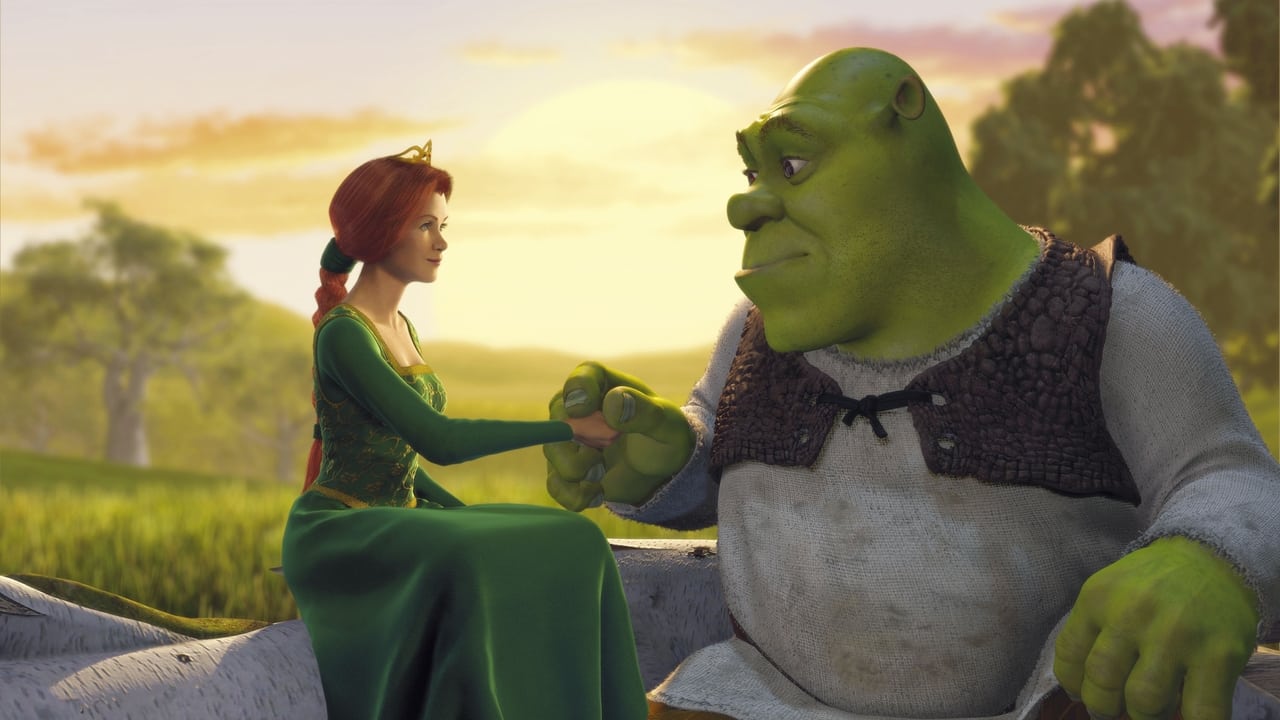
SentinelPrincess Fiona's ESTJ cognitive stack creates the franchise's most dynamic character transformation. Her dominant Te manifests in her decisive, take-charge approach to every situation—she expects her rescue to follow proper protocol, becomes frustrated when Shrek deviates from the fairy tale script, and takes efficient command during the Robin Hood fight scene, dispatching opponents with organized Te precision while Shrek handles the brawl with Se improvisation. Her auxiliary Si drives her attachment to fairy tale tradition and the established script of how princess rescues are supposed to unfold, creating genuine distress when reality fails to match her Si template of sword-drawn, banner-flying heroism. Fiona's tertiary Ne surfaces in her growing ability to adapt and find humor in unexpected situations, particularly as she begins enjoying the unconventional journey with Shrek rather than insisting on the prescribed narrative. Her inferior Fi is the key to her arc—she has spent years suppressing her authentic ogre self behind a Si-Te framework of what a princess should be, and her transformation at the film's climax represents the ESTJ's most profound growth: choosing inferior Fi authenticity over the comfortable Te-Si structure she has maintained her entire life, declaring that she is already in her true love's form.
“You didn't slay the dragon? ...But this isn't right! You were supposed to charge in, sword drawn, banner flying!”Learn about ESTJ →
Mongo
SentinelMongo's ESFJ cognitive stack operates with pure, uncomplicated devotion in his brief but memorable existence. His dominant Fe manifests immediately upon creation—he instinctively orients himself toward helping his community, understanding his purpose as serving and protecting the group without any need for personal motivation or reward, embodying the ESFJ's natural drive to place communal needs above individual survival. His auxiliary Si connects him to the tradition and recipe from which he was made, carrying Gingy's heritage in his very substance and drawing strength from that Si connection to familiar origins. Mongo's tertiary Ne surfaces in his surprising adaptability during the siege, finding creative ways to assist despite the novelty of his existence—navigating an unfamiliar world with an openness to new experience that supports his Fe mission. His inferior Ti shows in his simple, direct approach—he does not analyze or question his role but acts with immediate emotional conviction, his final word 'Be good' distilling his entire worldview into pure Fe sentiment without Ti complications. Mongo's brief arc from creation to sacrifice illustrates the ESFJ archetype at its most elemental: born into existence with an innate drive to protect and serve, he gives everything for his community without hesitation, demonstrating that ESFJ devotion is not learned behavior but a fundamental orientation of the type's cognitive architecture toward selfless communal care.
“Be good.”Learn about ESFJ →
Exploradores
Shrek
ExplorerShrek's ISTP cognitive stack drives the franchise's central theme of authenticity beneath a tough exterior. His dominant Ti creates a logical, self-sufficient worldview—he has rationally concluded that solitude is preferable to the rejection he faces from society, constructing an ordered swamp existence with efficient routines and clear boundaries. His auxiliary Se grounds him in physical competence and sensory reality, from his impressive combat abilities against Farquaad's knights to his appreciation of simple pleasures like mud baths and onions. Shrek's tertiary Ni surfaces in his 'ogres have layers' analogy, revealing surprising depth of self-awareness and the ability to perceive meaning beneath surfaces—an insight that Donkey's Se-Fi nature initially cannot grasp. His inferior Fe is the crux of his character arc: he desperately wants connection but lacks the emotional vocabulary to express vulnerability, misinterpreting Fiona's conversation with Donkey as rejection because his Fe cannot accurately read social-emotional dynamics. Shrek's development across the franchise illustrates the ISTP's growth journey: beginning as a self-isolated Ti-Se pragmatist who avoids emotional complexity, he gradually allows inferior Fe development through Fiona's patience and Donkey's persistence, learning that the logical framework he built around his heart was protecting him from the very connections that give life meaning.
“Ogres are like onions. We have layers.”Learn about ISTP →
Dragon
ExplorerDragon's ISFP cognitive stack reveals a deeply sensitive soul beneath the most intimidating exterior in the franchise. Her dominant Fi drives decisions based entirely on authentic personal feeling—she falls for Donkey not through logic or social convention but through genuine emotional connection, responding to his Se-Fi warmth when every other character sees only a terrifying beast. Her auxiliary Se manifests in her extraordinary physical power and acute sensory awareness, from her precise control of fire to her ability to track and locate characters across vast distances, and most dramatically when she crashes through Farquaad's cathedral window to devour him. Dragon's tertiary Ni surfaces in her apparent understanding of larger dynamics—she seems to intuit that Donkey genuinely cares for her beneath his fear, and she arrives at precisely the right moment during the wedding to save Shrek and Fiona. Her inferior Te shows in her difficulty expressing herself through organized communication, relying entirely on physical and emotional signals rather than structured interaction. Dragon's arc illustrates the ISFP's central truth: her authentic Fi feelings are consistently dismissed by a world that judges by external appearances, yet her genuine emotional connection with Donkey proves that ISFP depth transcends the superficial assessments others make, creating one of the franchise's most unexpectedly touching relationships.
“(Protective roar directed at anyone who threatens Donkey)”Learn about ISFP →
Puss in Boots
ExplorerPuss in Boots's ESTP cognitive stack makes him the franchise's most dashing action hero. His dominant Se is extraordinary even by ESTP standards—his swordsmanship combines reflexive physical skill with moment-to-moment environmental awareness, and his legendary 'cute eyes' maneuver demonstrates masterful Se understanding of how physical presentation manipulates others' immediate reactions. His auxiliary Ti provides the tactical framework behind his Se flair, calculating angles of attack, escape routes, and strategic deceptions with the analytical precision of a seasoned mercenary, as when he initially infiltrates Shrek's group by methodically assessing and exploiting their vulnerabilities. Puss's tertiary Fe surfaces in his theatrical charm and social magnetism—he performs for audiences with natural charisma, reads group dynamics to position himself advantageously, and eventually forms genuine emotional bonds with Shrek and Donkey that his Se-Ti nature initially resisted. His inferior Ni emerges in his Puss in Boots solo film through his confrontation with mortality, where he must face the long-term consequences of his reckless Se lifestyle and develop a deeper Ni perspective on what his nine lives actually mean. Puss's arc across the franchise illustrates the ESTP's maturation: from a lone mercenary driven by Se thrill-seeking and Ti self-interest to a loyal friend who learns that the most meaningful adventures are shared ones.
“Fear me, if you dare!”Learn about ESTP →
Donkey
ExplorerDonkey's ESFP cognitive stack makes him one of animation's most energetically authentic characters. His dominant Se demands constant sensory engagement with the world—he cannot tolerate silence, stillness, or solitude for even a moment, filling every space with chatter, movement, and interaction, from his nonstop commentary during the journey to Duloc to his physical inability to simply stand still during tense moments. His auxiliary Fi gives his Se energy a genuinely warm emotional core, expressing loyalty, hurt feelings, and affection with complete transparency—when Shrek pushes him away, his wounded Fi response is immediate and sincere rather than performative. Donkey's tertiary Te surfaces in moments of surprising practical insight, like when he points out the obvious logical flaws in Shrek's avoidance strategies or takes charge of organizing the fairy tale creatures' resistance. His inferior Ni manifests as difficulty grasping abstract concepts and deeper meanings—he completely misses the significance of the 'layers' metaphor, responding with literal Se associations like parfait and cake. Donkey's arc across the franchise illustrates the ESFP's transformative power: his relentless Se-Fi authenticity gradually wears down Shrek's ISTP defenses not through strategy or insight but through sheer persistent emotional presence, proving that sometimes the most effective catalyst for change is simply a friend who refuses to leave.
“I'm a donkey on the edge!”Learn about ESFP →
Encuentra Tu Personaje
¿Conoces tu tipo MBTI? Encuentra tu personaje correspondiente abajo.
Preguntas Frecuentes
Shrek is best typed as an ISTP. His dominant introverted thinking (Ti) gives him a logical, independent worldview — he values his solitude, approaches problems practically, and resists emotional displays. His auxiliary Se makes him physically capable and grounded in the present moment. His famous 'ogres have layers' speech perfectly captures the ISTP's depth hidden beneath a tough, no-nonsense exterior.
Donkey is an ESFP. His dominant extraverted sensing (Se) makes him hyperaware of his immediate environment and constantly seeking stimulation and social interaction. His auxiliary Fi gives him genuine emotional warmth and loyalty. Donkey cannot stand silence, craves companionship, and expresses his feelings openly and enthusiastically — all hallmark ESFP traits.
Lord Farquaad is an ENTJ. His character is defined by Te-Ni ambition — he pursues power with ruthless strategic efficiency, views people as tools to achieve his goals, and will sacrifice anyone to realize his vision of a perfect kingdom. His famous line 'Some of you may die, but that's a sacrifice I'm willing to make' perfectly encapsulates the dark side of unhealthy ENTJ leadership.
Explorar Más Series
Encuentra Tu Propio Tipo
Descubre tu tipo de personalidad MBTI y ve qué personajes ficticios comparten tus rasgos.
Hacer el Test