Friedrich Nietzsche - INTJ Personality Type

Friedrich NietzscheINTJ - Arquitecto

Philosopher

Origen

Germany

Confianza de Clasificación

ampliamente aceptado

Quick Facts

Born
October 15, 1844
Birthplace
Röcken, Saxony, Kingdom of Prussia
Nationality
German
Height
5'8" (173 cm)
Zodiac Sign
Education
University of Bonn, University of Leipzig
Known For
Thus Spoke ZarathustraBeyond Good and EvilÜbermensch ConceptWill to PowerEternal Recurrence

Who is Friedrich Nietzsche?

Friedrich Wilhelm Nietzsche was born on October 15, 1844, in Röcken, a small village in Prussian Saxony, the son of a Lutheran pastor. His father died when Friedrich was four, plunging the family into grief and relocating them to Naumburg, where he grew up surrounded by women — his mother, grandmother, two aunts, and sister Elisabeth. This environment, combined with his father's early death, genuinely shaped his later philosophical preoccupations with suffering, strength, and the will to create meaning in an indifferent universe.

A brilliant student, Nietzsche was offered a professorship in classical philology at the University of Basel at the remarkable age of 24 — before he had even completed his doctorate. His first major work, 'The Birth of Tragedy' (1872), shocked the academic establishment by blending rigorous philology with radical philosophical speculation about the Apollonian and Dionysian forces underlying Greek culture. His early friendship with composer Richard Wagner truly influenced his thinking about art and culture, though their bitter falling-out would become one of intellectual history's most dramatic ruptures.

Plagued by debilitating migraines, near-blindness, and chronic digestive problems, Nietzsche resigned from Basel in 1879 and spent the next decade as a wandering, stateless philosopher, writing in boarding houses across Switzerland, Italy, and France. Despite his suffering, this period produced his greatest works: 'The Gay Science' (1882), 'Thus Spoke Zarathustra' (1883-85), 'Beyond Good and Evil' (1886), and 'On the Genealogy of Morality' (1887). In January 1889, he suffered a complete mental collapse in Turin — allegedly triggered by witnessing a horse being beaten — from which he never recovered, spending his remaining eleven years in the care of his mother and sister.

Nietzsche's INTJ nature drives every page of his philosophy. His relentless pursuit of intellectual independence — 'God is dead,' the revaluation of all values, the rejection of herd morality — represents Ni-Te at its most radical: an internal vision so powerful it demands the dismantling of every existing structure. His aphoristic writing style reflects the INTJ's compressed, high-density thinking. His strong loneliness, inability to maintain close relationships, and ultimate isolation all point to an INTJ operating at the extreme edge of independent thought — so far ahead of his contemporaries that genuine connection became nearly impossible.
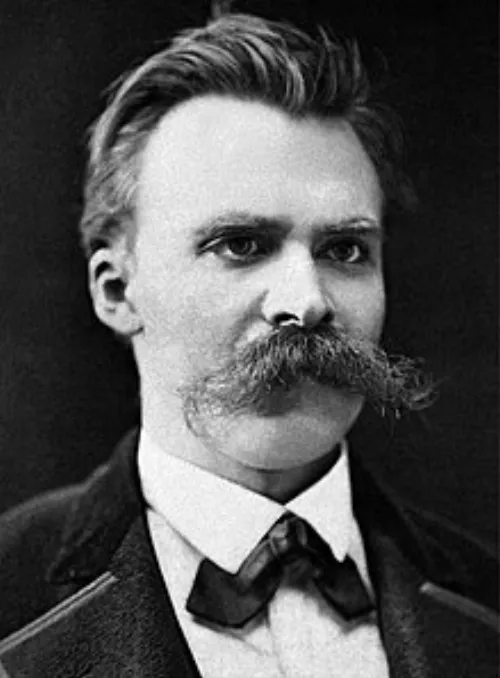

Tipo de Personalidad INTJ de Friedrich Nietzsche

Friedrich Nietzsche, conocido/a por su trabajo como Philosopher, exhibe los rasgos clásicos de un tipo de personalidad INTJ - Arquitecto. Este perfil de personalidad se caracteriza por una combinación única de funciones cognitivas que dan forma a cómo perciben el mundo y toman decisiones.

Rasgos INTJ Clave en Friedrich Nietzsche

Como INTJ, Friedrich Nietzsche demuestra las características centrales asociadas con este tipo de personalidad. Estos rasgos han jugado un papel significativo en su éxito y persona pública como Philosopher. Comprender su tipo de personalidad proporciona información sobre sus motivaciones, fortalezas y la perspectiva única que aportan a su campo.

Por Qué Friedrich Nietzsche es Clasificado/a como INTJ

El tipo de personalidad INTJ es uno de los 16 tipos de personalidad Myers-Briggs, y el comportamiento público, los patrones de toma de decisiones y el estilo de comunicación de Friedrich Nietzsche se alinean estrechamente con esta clasificación. Los individuos INTJ como Friedrich Nietzsche son conocidos por su enfoque distintivo para resolver problemas y las relaciones interpersonales.

Friedrich Nietzsche's Notable Works

1869

Professor at University of Basel

Appointed at age 24 — youngest person to hold the position

1872

Published The Birth of Tragedy

Revolutionary fusion of philology and philosophy

1883

Wrote Thus Spoke Zarathustra

His masterwork introducing the Übermensch and eternal recurrence

1886

Published Beyond Good and Evil

Critique of traditional morality and philosophical dogmatism

1887

On the Genealogy of Morality

Traced the historical development of moral concepts

Friedrich Nietzsche's Mystic Profile

Discover Friedrich Nietzsche's cosmic connections through zodiac, tarot, crystals, and spirit animals.

libra

Zodiac Prediction

Nietzsche's Libra placement creates a fascinating paradox with his INTJ nature. Libra seeks balance and harmony, yet Nietzsche's philosophy dynamites every comfortable equilibrium. This tension is the engine of his genius: the Libra scales forever weighing, measuring, and testing — not to find balance, but to prove that genuine greatness lies beyond simple dichotomies of good and evil. His concept of the Übermensch is ultimately a Libran vision: transcending opposites to create something entirely new.

🃏

the tower

Tarot Card Match

The Tower represents the sudden, dramatic destruction of false structures — and no thinker in history has been more devoted to demolishing comfortable illusions. Nietzsche's declaration that 'God is dead' is the ultimate Tower moment: a lightning strike that shatters the old order, clearing space for whatever has the courage to build anew.

💎

obsidian

Crystal Match

Obsidian, born of volcanic fire and capable of revealing the deepest hidden truths, mirrors Nietzsche's unflinching philosophy. This stone of shadow work forces the bearer to confront uncomfortable realities — exactly what Nietzsche's writings demand of every reader brave enough to engage with them.

🦁

raven

Spirit Animal

The raven — associated with prophecy, transformation, and the courage to dwell in darkness — perfectly captures Nietzsche's philosophical spirit. Like the raven, Nietzsche saw beauty where others saw only darkness, finding in suffering, solitude, and the abyss not despair but the raw material for human greatness.

Más Personalidades INTJ Famosas

Sobre Este Análisis

Este análisis de tipo de personalidad de Friedrich Nietzsche se basa en información disponible públicamente, entrevistas, relatos biográficos y observaciones de comportamiento. La clasificación INTJ representa una evaluación educada por entusiastas y expertos en tipos de personalidad, pero no debe considerarse como oficialmente confirmada a menos que se indique lo contrario. La personalidad es compleja y multifacética, y las personas públicas pueden diferir de las personalidades privadas.