🦉 Búho Nocturno~25% of the population

ENTP ChronotypeThe DebaterBúho Nocturno

Patrones de Sueño y Cronotipo de ENTP

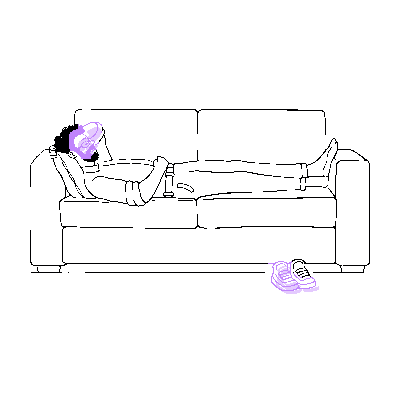
Los ENTP son los búhos nocturnos más energizados socialmente: son los que siguen debatiendo a las 2 AM, lanzando proyectos paralelos a medianoche y enviando mensajes con ideas descabelladas a la 1 AM. A diferencia de los búhos introvertidos más tranquilos, la energía nocturna del ENTP es cinética y orientada hacia el exterior, impulsada por una Ne insaciable que genera más posibilidades a medida que avanza la noche. Su relación con el sueño es antagónica: dormir se siente como perderse descubrimientos potenciales.

Por qué los ENTP son Búho Nocturno: Funciones Cognitivas y Sueño

La Ne dominante (Intuición Extrínseca) es una máquina generadora de posibilidades que se vuelve más activa a medida que caen las restricciones. La noche elimina la estructura del día laboral, liberando a Ne en un modo de exploración libre. La Ti auxiliar (Pensamiento Introspectivo) luego analiza estas posibilidades con creciente precisión a medida que disminuye el ruido externo. El resultado es un ENTP nocturno que simultáneamente genera ideas y las pone a prueba, un bucle de retroalimentación cognitiva que produce ideas brillantes pero hace el sueño casi imposible.

Función Dominante

Ne operates at its most expansive when freed from daytime structure and obligation. Each evening, as the schedule loosens, Ne begins generating connections, ideas, and ‘what-ifs’ at accelerating speed. This is why ENTPs often feel more alive and mentally sharp at 11 PM than at 11 AM.

Función Auxiliar

Ti provides the analytical backbone that transforms Ne’s wild ideas into viable frameworks. During late-night sessions, Ti operates with unusual focus because there are no competing demands — no emails, no meetings, no interruptions — allowing the ENTP to actually finish the analytical work that Ne usually prevents during the day.

Patrón de Energía de ENTP a lo Largo del Día

ENTPs wake with scattered energy — alert enough to function but without focus. Morning is for stimulation-seeking: scrolling news, checking messages, bouncing between tasks. By 10 AM, Ti helps focus this scattered energy into analytical work. Afternoon is the most social and externally productive period, with ENTPs at their charismatic best. Energy dips briefly around 6-7 PM but rebounds dramatically by 9 PM. From 10 PM onward, Ne enters hyperdrive — this is when the ENTP starts three new projects, has four breakthrough ideas, and sends twelve messages they may regret in the morning.

Ventanas de Máxima Productividad de ENTP

🎨

Pico Creativo

11 PM - 3 AM

📊

Pico Analítico

10 AM - 12 PM

🤝

Pico Social

1 PM - 6 PM

Desafíos Comunes de Sueño para ENTP

  • !The ‘idea avalanche’ at bedtime — Ne generates possibilities faster than they can be recorded, creating anxiety about losing brilliant insights to sleep
  • !FOMO (Fear of Missing Out) on nighttime conversations, online discussions, or project momentum that feels too exciting to abandon
  • !Stimulation addiction — the dopamine hit of new ideas and connections makes the low-stimulation act of lying quietly in bed feel unbearable

Rutina Diaria Ideal para ENTP

🌅

Mañana

Wake around 8:30-9 AM with an engaging stimulus — a podcast, news brief, or interesting article to satisfy Ne’s immediate need for input. Use the first hour for low-stakes information consumption. Physical exercise between 9-10 AM helps channel scattered morning Ne energy into the body.

☀️

Tarde

Late morning to early afternoon (10 AM - 1 PM) is prime time for analytical deep work that requires Ti focus. Early afternoon (1-4 PM) is the social performance window — presentations, brainstorming sessions, debates, networking. Late afternoon (4-6 PM) is good for collaborative work and mentoring.

🌆

Noche

After 7 PM, allow Ne to roam freely but with one constraint: choose a single project or creative thread to follow rather than bouncing between five. The evening is where ENTPs do their best original work — building prototypes, writing proposals, designing systems. Keep communication channels open for collaborative energy but set boundaries on new threads.

🌙

Hora de Dormir

At 11:30 PM, initiate the ‘idea harvest’ — spend 15 minutes recording all active thoughts into a single capture document. Then switch to a low-stimulation but mentally engaging activity: chess puzzles, light fiction, or ambient music. The goal is to give Ne something to chew on that doesn’t generate new actionable ideas. Aim for sleep by 12:30 AM.

Consejos de Optimización del Sueño para ENTP

  • Use voice-to-text to rapidly capture late-night ideas without fully re-engaging your analytical brain — record the spark, not the full analysis
  • Create a ‘no new projects after 11 PM’ rule — you can plan and brainstorm, but don’t open new tabs, sign up for new tools, or start new codebases
  • Channel the FOMO productively: remind yourself that a well-rested brain will generate better ideas tomorrow than an exhausted one will at 3 AM
  • Find a late-night accountability partner (another ENTP or INTP) who you can exchange ideas with before a mutually agreed ‘shutdown time’

Perspectivas de Salud para ENTP Búho Nocturno

ENTPs are particularly vulnerable to stimulant dependency (caffeine, energy drinks) to compensate for accumulated sleep debt. The dopamine-seeking nature of dominant Ne creates a feedback loop where sleep deprivation increases the need for stimulation, which delays sleep further. Protecting at least 7 hours of sleep is essential for maintaining the quick-witted processing speed that ENTPs rely on in social and professional settings.

Compatibilidad de Cronotipo ENTP

ENTP night owls are surprisingly compatible with INFJ night owls — both types come alive in the evening and enjoy deep late-night conversations. The challenge arises with early bird ISFJ or ISTJ partners who interpret the ENTP’s late nights as irresponsibility. Clear communication about biological rhythms (backed by the ENTP’s favorite thing: research and data) can help bridge this gap.

Otros Tipos Búho Nocturno

Explorar Más

Sobre este Análisis

Este análisis de cronotipo para ENTP se basa en correlaciones entre las funciones cognitivas MBTI y la investigación sobre ritmos circadianos. Los patrones de sueño individuales varían y están influenciados por la genética, la edad, el estilo de vida y el entorno. Este contenido es solo para fines informativos y de entretenimiento, y no debe reemplazar el consejo médico profesional sobre trastornos del sueño o condiciones de salud.